The short answer
An N95 can help with the fine particles in wildfire smoke. It works only when air passes through the filter instead of around gaps at the face. A respirator is an additional layer, not permission to remain in unhealthy air.
Start here
- Follow official instructions, including evacuation or shelter directions.
- Reduce time and exertion in smoke and move to cleaner air when possible.
- If outdoor exposure cannot be avoided, use a NIOSH Approved N95 or P100 that fits the wearer.
- Replace it when it is wet, dirty, damaged, or difficult to breathe through.
Choose a respirator, not a loose mask
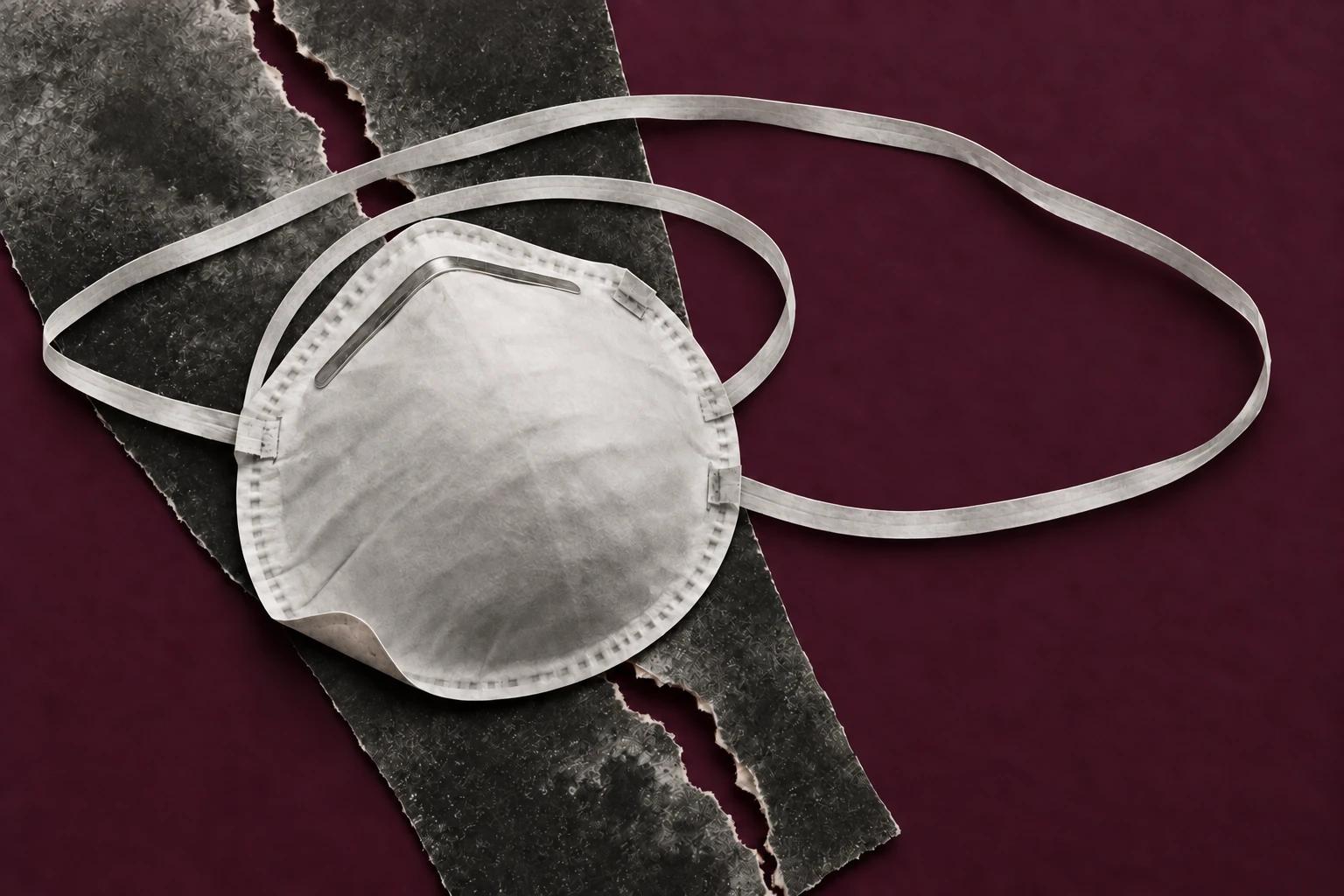
Look for the words NIOSH Approved, a NIOSH name or logo, the filter class such as N95 or P100, and a testing and certification number beginning with TC-84A. A filtering facepiece respirator normally has two head straps and a formable nosepiece.
Cloth masks, surgical masks, bandanas, and masks with gaps do not provide the same protection from smoke particles. A product marketed with terms such as “PM2.5,” “KN95,” or “dust mask” is not automatically NIOSH Approved.
Fit matters more than the label alone
Place both straps as the manufacturer directs, shape the nosepiece with both hands, and check the seal each time. Air leaking near the nose, cheeks, or chin means the respirator is not working as intended.
Facial hair, an unusual face shape, damaged straps, or the wrong size can prevent a seal. Different models fit differently. A person may need to try more than one model or size.
Do not put a respirator on a person who cannot remove it independently unless a qualified caregiver or clinician has provided a plan. Children need a product that fits their face; an adult respirator with obvious gaps is not a protective substitute.
Know what it cannot do
An N95 filters particles. It does not protect against carbon monoxide or most gases and vapors in smoke. It does not supply oxygen. It is not a substitute for leaving a fire, a hazardous-material release, a poorly ventilated space, or any place officials say to evacuate.
Respirators also make breathing harder and can add heat and discomfort. People with heart or lung conditions, or anyone unsure whether a respirator is appropriate, should ask a clinician before an emergency when possible. If wearing one causes dizziness, marked breathing difficulty, chest pain, confusion, or another concerning symptom, move to cleaner air and seek appropriate medical help.
Store it so it will still work
Keep unused respirators dry, clean, and where the intended wearer can reach them. Do not crush the nosepiece or stretch the straps during storage. Inspect the respirator before use. Replace it if it is wet, dirty, damaged, no longer seals, or has become difficult to breathe through.
The useful household record is not “owns masks.” It is:
- who expects to use one;
- which model and size seals for that person;
- where clean replacements are stored;
- which people need another exposure-reduction plan; and
- which cleaner-air location remains the fallback.
What not to do
- Do not use an N95 to enter or remain near a fire.
- Do not rely on it for carbon monoxide, gases, vapors, or low oxygen.
- Do not place it over facial hair or obvious gaps and count the person as protected.
- Do not use a wet, dirty, damaged, or hard-to-breathe-through respirator.
- Do not let a respirator delay evacuation or a move to cleaner air.
Next action
For each person who may need to go outdoors during smoke, identify a NIOSH Approved respirator that seals, store clean replacements, and record the cleaner-air fallback for anyone who cannot use one.
What changes this answer
General guidance becomes a personal decision through these details.
current smoke, official instructions, distance from fire, heat, and access to cleaner indoor air.
age, fit, facial hair, heart or lung conditions, ability to remove the respirator, and unavoidable outdoor responsibilities.
genuine approval markings, model and size, condition, storage, and replacement supply.
exertion, duration, temperature, and whether a cleaner route or location is available.
Where this guidance stops
- This guide is for community wildfire-smoke exposure. It is not a workplace respiratory-protection program, a medical clearance, a fit test, or guidance for firefighting, confined spaces, hazardous materials, oxygen-deficient air, or occupational exposure. Employers must follow applicable workplace rules.
Sources
Consequential guidance is checked against the linked source material.
- Centers for Disease Control and Prevention, National Institute for Occupational Safety and Health. How to Use Your N95 Respirator. Checked September 24, 2026.
- Centers for Disease Control and Prevention, National Institute for Occupational Safety and Health. Community Respirators and Masks. Checked September 24, 2026.
- Centers for Disease Control and Prevention, National Institute for Occupational Safety and Health. How to Protect Workers and the Public from Wildfire Smoke. Checked September 24, 2026.
- AirNow. Protect Your Lungs from Wildfire Smoke or Ash. Checked September 24, 2026.
General information, not advice tailored to you or a guarantee of safety. You are responsible for decisions about your safety. Follow current directions from local authorities. Read the safety disclaimer.