The short answer
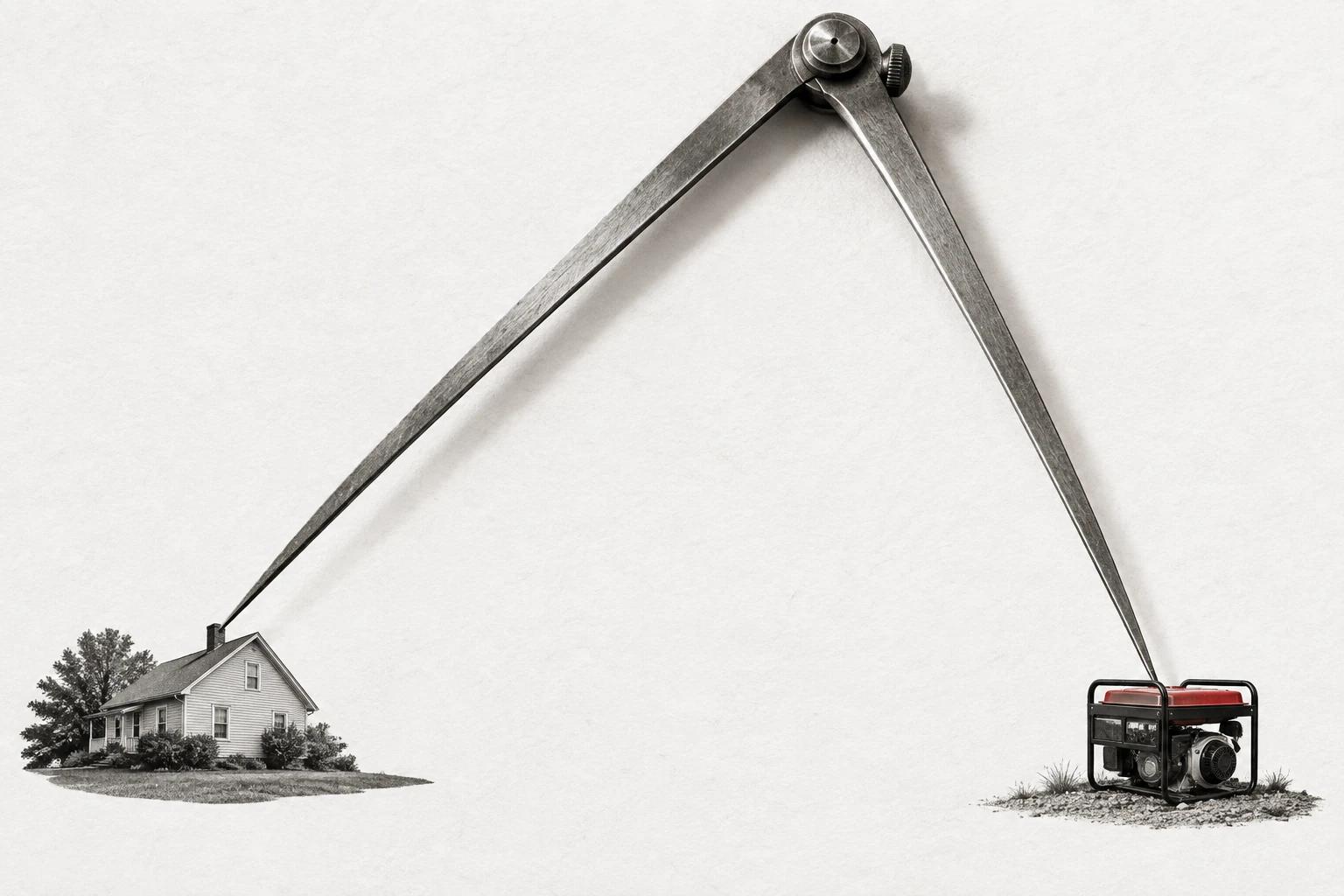
Run a fuel-burning portable generator outside, at least 20 feet from the home, doors, windows, and vents. Point the exhaust away from every building someone could enter. A garage, shed, carport, porch, balcony, crawlspace, or covered doorway is not a safe substitute for an outdoor location.
Start here
- Measure 20 feet from the home, doors, windows, and vents before an outage.
- Choose a dry outdoor location where the exhaust can point away from occupied buildings.
- Install working battery-operated or battery-backup carbon-monoxide alarms.
- Read the generator instructions before choosing cords, loads, weather protection, or fuel storage.
Choose the location before the power fails
Measure the distance rather than estimating it. Keep the generator at least 20 feet from the home and its openings, with the exhaust directed away from the home and nearby occupied buildings.
Do not plan to use a garage, shed, carport, porch, balcony, crawlspace, or covered doorway. Opening doors and windows does not make an enclosed or partly enclosed location safe from carbon monoxide.
Prepare the home around it
- Use a working carbon-monoxide alarm on every level and outside sleeping areas.
- Keep windows and doors closed along the exhaust path.
- Keep children and pets away from the generator, fuel, cords, and hot surfaces.
- If no outdoor location meets the distance and exhaust requirements, do not operate the generator there.
Connect and run it without creating another hazard
Follow the generator and appliance instructions. Plug appliances directly into the generator or use cords approved for the generator, outdoor location, and electrical load.
Never connect a generator to a wall outlet. Connecting a generator to household wiring requires a transfer switch installed by a qualified electrician.
- Keep the generator and electrical connections dry.
- Do not touch electrical equipment with wet hands or while standing in water.
- Turn the generator off and let it cool before adding fuel.
- Store fuel outside the home and away from ignition sources.
Leave if carbon monoxide is possible
If a carbon-monoxide alarm sounds, or anyone develops headache, dizziness, weakness, nausea, vomiting, chest pain, unusual sleepiness, or confusion, everyone should move outside to fresh air immediately and call 911. Do not reenter until emergency responders say it is safe.
What changes this answer
General guidance becomes a personal decision through these details.
Distance, doors, windows, vents, nearby buildings, water, and where exhaust can travel.
The generator's instructions, rated load, cords, fuel, transfer equipment, and weather protection.
Sleeping areas, children, pets, access needs, and whether alarms can wake everyone.
Wind, rain, flooding, theft risk, damage, and any reason the planned location is no longer safe.
Where this guidance stops
- This guide covers fuel-burning portable generators, not permanently installed standby systems.
- It does not size a generator, approve a cord, or determine whether household wiring is safe.
- The generator instructions and qualified electrical guidance control when they are more specific.
Sources
Consequential guidance is checked against the linked source material.
- Centers for Disease Control and Prevention. What to Do to Protect Yourself During a Power Outage. Checked September 4, 2026.
- U.S. Consumer Product Safety Commission. Generators and Engine-Driven Tools. Checked August 28, 2026.
- Occupational Safety and Health Administration. Using Portable Generators Safely. Checked August 28, 2026.
- Federal Emergency Management Agency. Use Generators Safely at Home. Checked August 28, 2026.
General information, not advice tailored to you or a guarantee of safety. You are responsible for decisions about your safety. Follow current directions from local authorities. Read the safety disclaimer.