The short answer
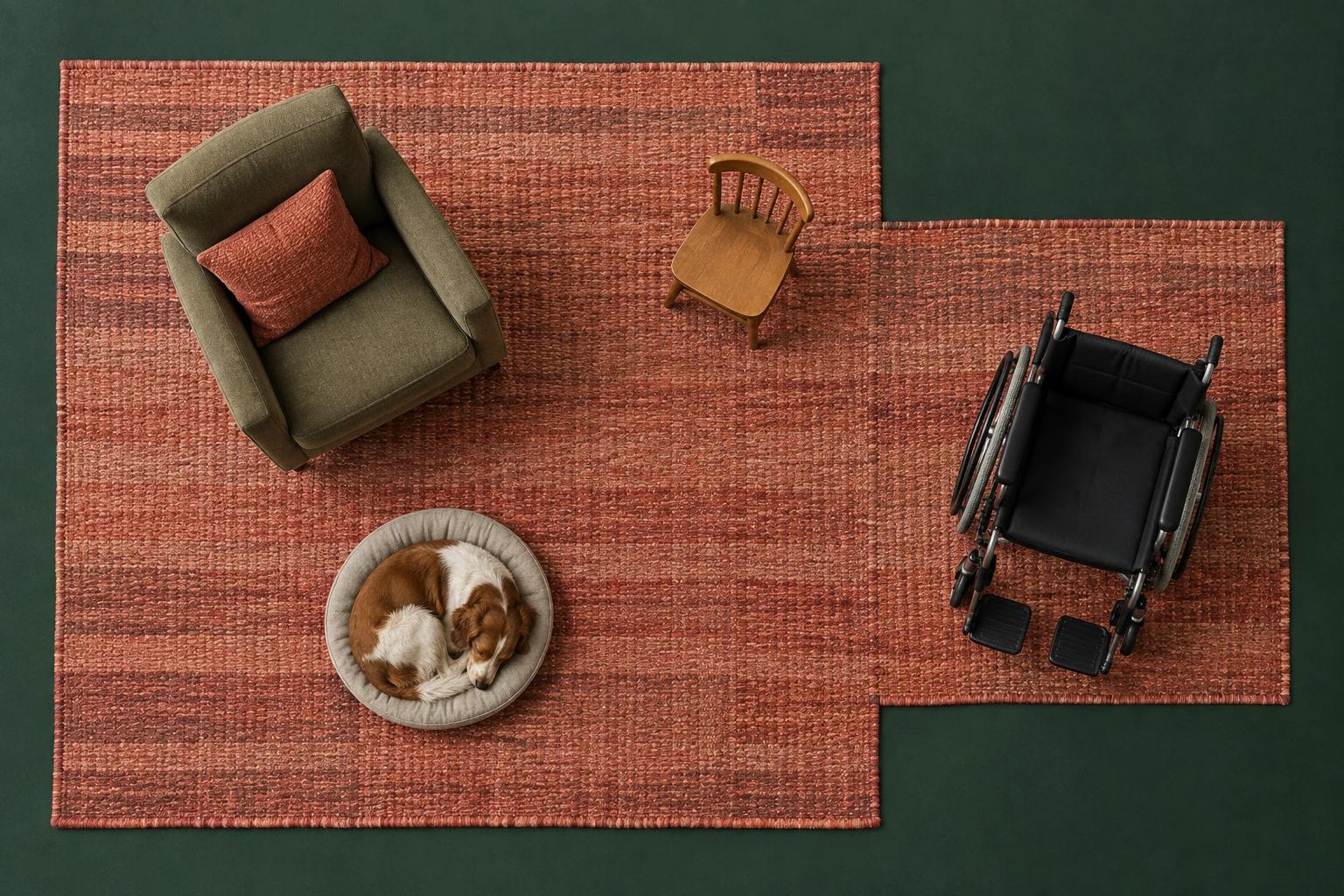
Choose a room that can fit the people and animals who will use it, has few exterior openings, can stay cool, works for everyone's access needs, and keeps a clear exit. Plan how existing filtration, medicine, water, communication, and animal supplies would move there. A cleaner-air room can reduce particle exposure, but it is not smoke-free and it never replaces an evacuation order.
Start here
- Compare the rooms that everyone in the household could occupy for several hours.
- Prefer a room with a door and windows that close, few exterior openings, safe cooling, enough space, usable outlets, and a clear exit.
- Walk the route with the people, animals, mobility equipment, and supplies that would need to enter.
- Give the room a plain household label and tell everyone when it would be used.
What a cleaner-air room is for
A cleaner-air room is intended to reduce exposure to wildfire smoke and fine particles while the household remains indoors. It is not the correct response to ozone, carbon monoxide, a chemical release, or fire approaching the building.
If officials tell the area to evacuate, leave according to those instructions. A closed room does not protect a household from fire, structural danger, or every substance in outdoor air.
Choose the room before smoke arrives
- Make sure it is large enough for the people and animals who will use it.
- Prefer a room with a door and windows that close and few exterior openings.
- Confirm that it can remain at a safe temperature with the cooling available.
- Check that everyone can reach and use it, including with mobility equipment or assistance.
- Keep enough outlets for planned filtration and required equipment without unsafe cord arrangements.
- Keep the exit clear and leave enough space for medicine, water, communication, animal, and hygiene supplies.
Inspect the room
- Close the windows and door, then confirm that everyone can still leave quickly.
- Identify exhaust fans, fireplaces, outside-air intakes, and appliances that change airflow. Do not alter equipment unless its instructions permit it.
- Find any recirculation or outside-air control on compatible heating and cooling equipment.
- Choose a safe location for an existing air cleaner or reviewed temporary filter without blocking an exit or creating a trip hazard.
- Walk the route with mobility equipment, children, animals, and any assistance that would be needed.
Prepare the room without making it a project
Choosing the room does not require buying a monitor or air cleaner. Closing exterior openings, avoiding indoor particle sources, and spending time in one suitable room can still reduce exposure.
- Keep a damp cloth or mop for settled dust.
- Identify meals that do not require frying or broiling during heavy smoke.
- Plan to avoid smoking, vaping, candles, incense, aerosols, and other indoor particle sources.
- Save the instructions for any fan, filter, air cleaner, or cooling equipment you already use.
- Record the filter size for equipment you already own when practical.
When smoke arrives
- Confirm that smoke or particle pollution is the problem and check current official instructions.
- Close the room's windows and doors without blocking the exit.
- Use recirculation on compatible equipment and run available filtration according to its instructions.
- Avoid creating particles in the room or elsewhere in the home.
- Spend more time in the cleaner-air room while outdoor particle levels are high.
- Recheck temperature, smoke entry, power, equipment, and everyone using the room.
Use another location when the room is not suitable
Confirm that any cleaner-air shelter or other destination is open, reachable, and able to meet the household's needs for the current event. An old listing does not prove that a site is open now.
- Officials order evacuation or another hazard makes the building unsafe.
- The room cannot remain cool enough or too much smoke keeps entering.
- Electricity needed for cooling, filtration, medicine, or medical equipment is unavailable.
- The room cannot support someone's access, care, or medical needs.
- Someone develops symptoms that require medical advice or emergency care.
What changes this answer
General guidance becomes a personal decision through these details.
Capacity, exterior openings, cooling, outlets, nearby facilities, airflow, and a clear exit determine whether it can work.
Mobility, assistance, medical needs, symptoms, privacy, sleep, and time spent in the room change what must be prepared.
Space, carriers, leashes, water, sanitation, toxic plants, hiding places, and service-animal needs belong in the plan.
Smoke source, particle levels, heat, power, evacuation instructions, and whether another location is actually available can override the plan.
Where this guidance stops
- A cleaner-air room reduces particle exposure. It is not sealed, smoke-proof, or safe from an approaching fire.
- A room that limits smoke but traps dangerous heat is not suitable.
- Do not block an exit, use combustion equipment indoors, assume filtration removes gases, or ignore an evacuation instruction because the room is prepared.
Sources
Consequential guidance is checked against the linked source material.
- U.S. Environmental Protection Agency. Create a Clean Room to Protect Indoor Air Quality During a Wildfire. Updated August 18, 2026. Checked August 30, 2026.
- U.S. Environmental Protection Agency. How to Create a Cleaner Air Room at Home. Room selection and preparation guidance. Checked August 30, 2026.
- Centers for Disease Control and Prevention. Be Prepared: Pet Safety in Emergencies. Updated April 9, 2024. Checked August 30, 2026.
- AirNow. Wildfire Guide Factsheets. Public-health guidance for wildfire smoke. Checked August 30, 2026.
General information, not advice tailored to you or a guarantee of safety. You are responsible for decisions about your safety. Follow current directions from local authorities. Read the safety disclaimer.