The short answer
Wait until the storm has ended, check first for electrical, gas, and structural hazards, and document visible hail damage without climbing onto the roof.
Start here
- Wait until the severe-weather threat has ended and any lightning waiting interval or official restriction has been satisfied.
- From a safe location, check for fallen lines, gas leaks, unstable structures, and water near electrical equipment. Keep away and report hazards.
- Document visible damage from the ground. Do not climb onto the roof.
Before you inspect
Confirm that the severe-weather threat has ended. Keep monitoring official warnings because another storm may follow.
If thunder occurred, wait at least 30 minutes after the last thunder before going outside. Use a longer interval if local officials, a workplace plan, or a site-specific lightning system requires one.
Wear sturdy closed-toe shoes, long pants, work gloves, and eye protection if broken glass or sharp debris may be present. Keep children and pets away from the inspection area.
Stop before approaching the building if you find any of these
- a fallen or low electrical line;
- a wire touching a tree, fence, vehicle, roof, puddle, or other object;
- sparks, arcing, smoke, or a burning odor;
- the odor or sound of leaking gas;
- standing water near electrical equipment;
- a sagging roof or ceiling;
- a leaning wall, shifting building, or unusual movement or noise; or
- an area that officials have not cleared for entry.
Treat every fallen or damaged line as energized. Do not touch the line or anything it contacts. Keep away and report it to emergency services or the electric utility.
If you smell gas or hear gas escaping, leave the area. Do not operate switches, use a flame, start a vehicle nearby, or do anything else that could produce a spark. Call emergency services or the gas utility from a safe location.
Do not enter a visibly damaged building until the appropriate local authority or qualified professional says it can be entered.
Inspect from a safe location
Start with a wide view from the ground. Do not climb onto the roof.
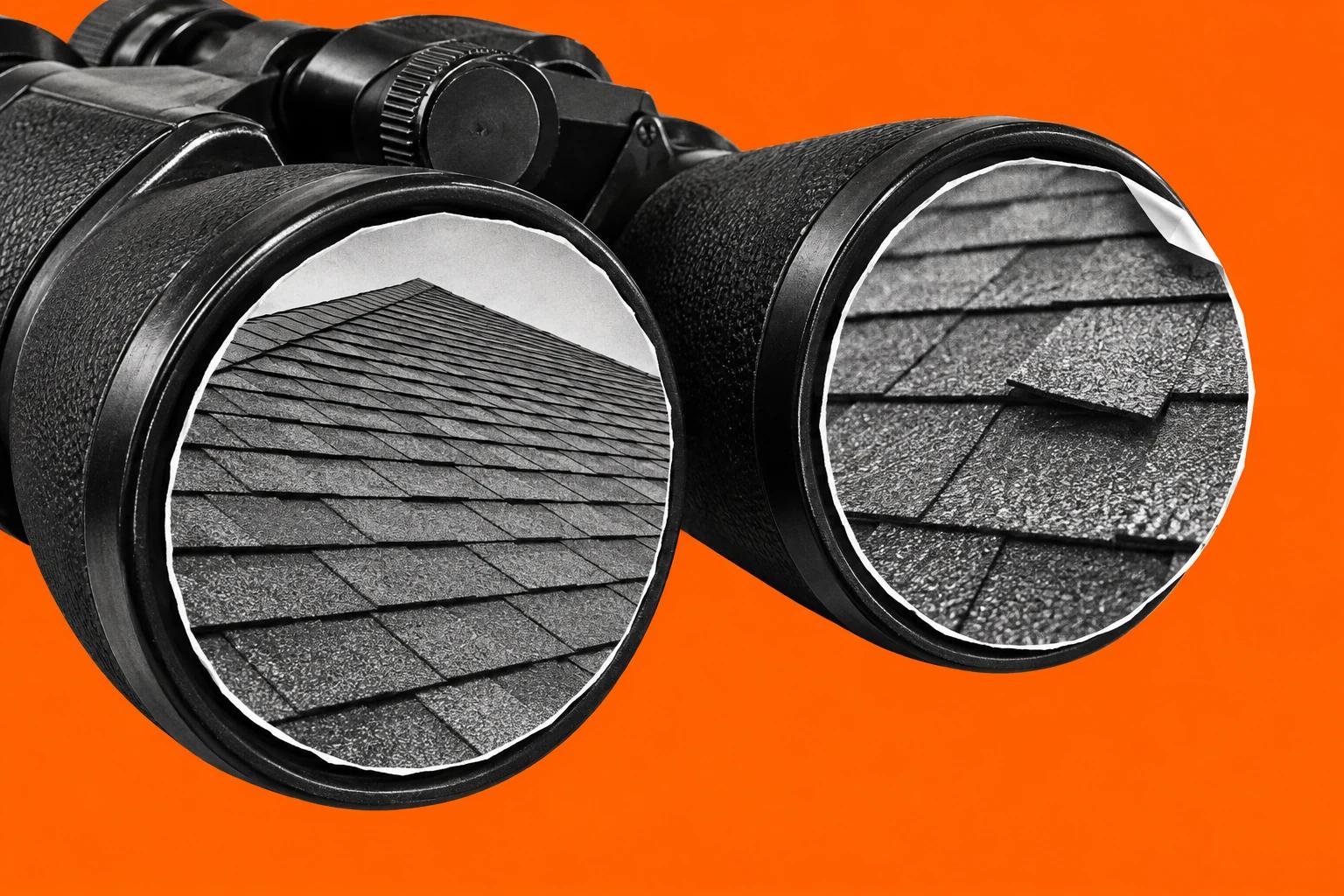
Use a phone camera with zoom or binoculars from a stable location to look for:
- missing, cracked, lifted, or displaced roof material;
- punctures or dents in metal roofing, gutters, downspouts, vents, and flashing;
- broken skylights or windows;
- damaged siding, exterior trim, screens, or doors;
- fallen branches or debris resting on the building;
- damaged outdoor heating or cooling equipment;
- damaged solar panels, conduit, or exposed wiring; and
- vehicle glass and body damage.
Do not assume the roof is undamaged because no problem is visible from the ground. Some damage requires a qualified roof inspection.
Check the interior only if the building appears safe to enter
Look for:
- water stains, drips, or new moisture;
- broken glass;
- a sagging, bulging, or cracking ceiling;
- wet light fixtures, outlets, or electrical equipment; and
- daylight visible through the roof or exterior walls.
Keep clear of a sagging or wet ceiling and the floor beneath it. Do not touch wet electrical equipment. Leave the building if it shifts, makes unusual noises, smells of gas, or otherwise appears unstable.
Record the damage before cleanup
When it is safe:
- Record the date, approximate time, and address.
- Take wide photos that show where the damage is located.
- Take closer photos of each damaged area without entering a hazardous space.
- Make a list of damaged parts of the home, outdoor equipment, vehicles, and belongings.
- Save damaged items when practical and safe in case an insurer needs to inspect them.
- Keep receipts for temporary repairs, lodging, storage, and other storm-related costs.
Photographs help document a loss, but they do not establish insurance coverage or prove that a structure is safe.
Prevent additional damage only when the work is safe
Contact the insurer promptly and ask what documentation and temporary repairs it requires.
Reasonable temporary measures may include moving an undamaged item away from an active leak or arranging for a broken window to be boarded. Do not climb onto a wet, steep, damaged, or unfamiliar roof to install a tarp. Roof inspection and tarping involve fall, ladder, and electrical hazards and should be done by someone with the equipment and training for the work.
Delay permanent repairs until the insurer has explained its inspection and documentation requirements, unless an immediate repair is necessary for safety. Keep all estimates, contracts, and receipts.
Do not
- Do not go outside while hail, lightning, damaging wind, or another warning remains active.
- Do not approach, touch, or drive over a fallen line.
- Do not step into water near electrical equipment or wiring.
- Do not enter a visibly damaged or uncleared building.
- Do not climb onto the roof to look for hail marks.
- Do not stand beneath damaged trees, gutters, signs, siding, or other material that may fall.
- Do not make permanent repairs before documenting the loss and checking the insurer's requirements, except when immediate action is required for safety.
- Do not sign a repair contract under pressure.
Next action
Record what can be seen safely from the ground and from safe interior areas. If there may be roof, structural, electrical, gas, solar, or heating and cooling damage, contact the appropriate qualified professional and the insurer.
What changes this answer
General guidance becomes a personal decision through these details.
Another storm, fallen wires, gas, standing water, unstable trees, and damaged structures may prevent any inspection.
Mobility, debris, lighting, and available assistance determine what can be observed without entering danger.
Roofing, solar panels, electrical equipment, gas, and heating or cooling damage may need different qualified professionals.
The policy, insurer's instructions, urgent repairs, and evidence requirements affect documentation and timing.
Where this guidance stops
- No visible damage from the ground is not proof that a roof or structure is sound.
- Photographs and a completed checklist do not certify electrical, gas, building, or roof safety.
- This is not a roof-access or tarping procedure. Use a qualified professional for hazardous work.
- Documentation does not establish insurance coverage. Policy terms and the insurer's instructions apply.
Sources
Consequential guidance is checked against the linked source material.
- National Weather Service. What to Do After Severe Weather. Checked August 29, 2026.
- National Weather Service. After a Hurricane. Checked August 29, 2026.
- Occupational Safety and Health Administration. Roof Inspection, Tarping, and Repair. Checked August 29, 2026.
- National Association of Insurance Commissioners. Navigating the Claims Process: Recover & Rebuild. Checked August 29, 2026.
- National Association of Insurance Commissioners. Post-Disaster Claims Guide. Checked August 29, 2026.
General information, not advice tailored to you or a guarantee of safety. You are responsible for decisions about your safety. Follow current directions from local authorities. Read the safety disclaimer.