The short answer
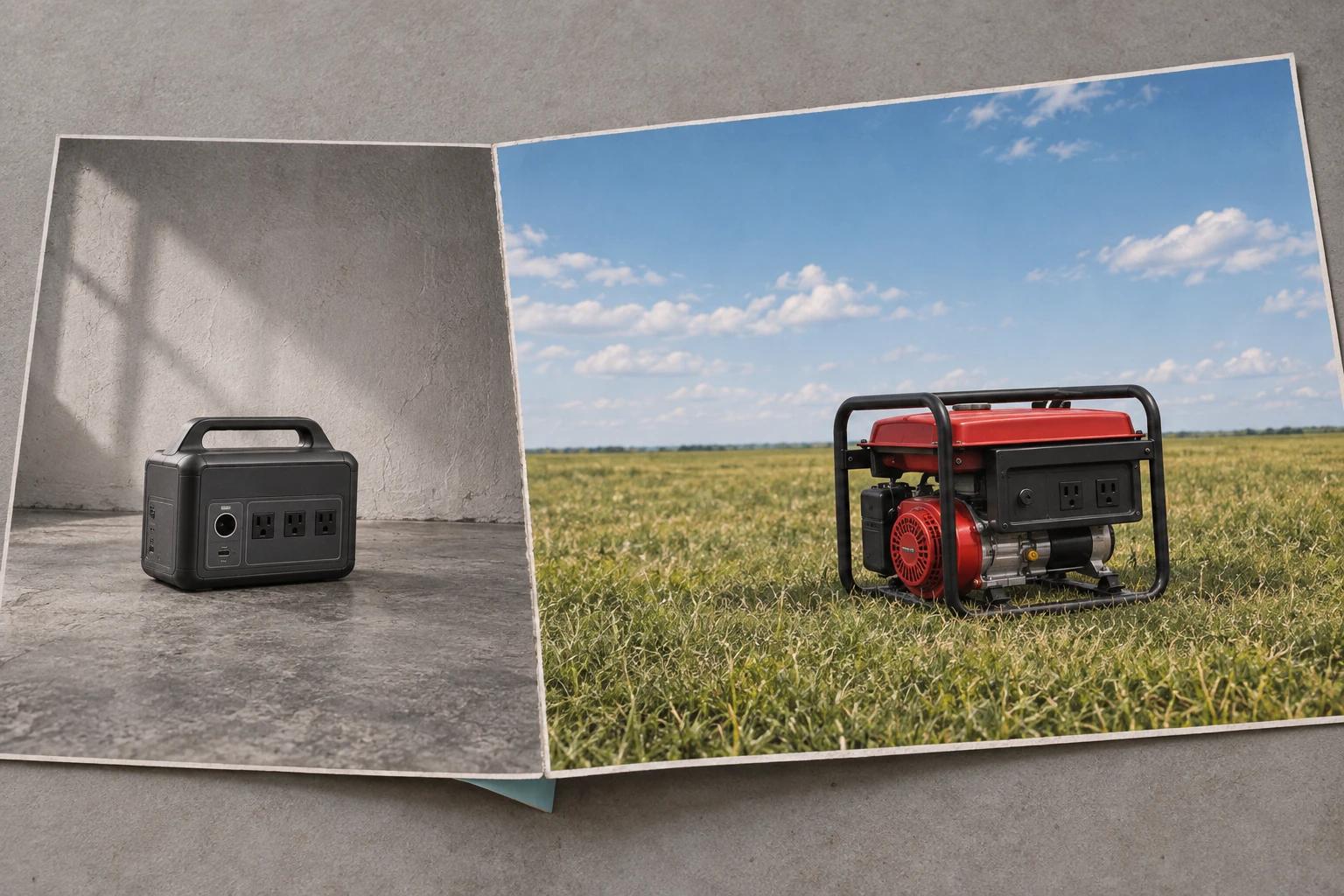
Neither source is automatically better. Choose from the load, outage duration, location, maintenance, recharge or fuel access, and the people who must operate it.
Start here
- Write down the loads and the period they need support before comparing products.
- Check whether a generator can operate safely outdoors, at least 20 feet from the home.
- Compare tested runtime, recharge or fuel access, and who can safely operate the equipment.
Choose the load first
Complete the load table before comparing products. A phone and a few lights are a different problem from refrigeration, a pump, heating or cooling, or a power-dependent medical device.
If the planned load exceeds a source's continuous output, start-up capacity, stored energy, or connection limits, that source does not meet the plan even if the marketing description calls it “home backup.”
Compare the practical differences
Where can it operate?
- Portable power station: Only where the manufacturer permits; no combustion exhaust at the point of use.
- Fuel-burning generator: Outdoors only, at least 20 feet from the home, with exhaust directed away from buildings and openings.
How long can it run?
- Portable power station: Until stored energy is depleted, unless a supported recharge source is available.
- Fuel-burning generator: While safely operated and fueled, subject to fuel, maintenance, weather, and rated load.
What limits the load?
- Portable power station: Continuous output, surge output, usable watt-hours, outlet and temperature limits.
- Fuel-burning generator: Rated output, connection method, fuel, duty, maintenance, and weather protection.
What routine work does it need?
- Portable power station: Inspection, storage, charge management, periodic test, and approved charging.
- Fuel-burning generator: Fuel management, maintenance, safe outdoor placement, weather protection, CO alarms, and periodic test.
Main hazards
- Portable power station: Damaged or overheating batteries, unsuitable charging, overload, moisture, and improvised connections.
- Fuel-burning generator: Carbon monoxide, fire, fuel, shock, wet operation, overload, and backfeeding.
A portable battery may fit when
- the priority loads are modest;
- quiet operation matters;
- fuel cannot be stored or handled;
- there is no safe outdoor generator location;
- short outages are the principal concern; or
- a supported recharge method and fallback are available.
A battery still needs safe charging, storage, inspection, and enough time to recharge. It may not support heating, cooling, pumps, refrigeration, or other high-draw equipment for the desired period.
A portable generator may fit when
- the planned output is larger;
- the outage may outlast practical battery capacity;
- fuel can be stored and replenished safely;
- an outdoor operating position at least 20 feet from the home is available;
- the operator can manage setup and maintenance; and
- the electrical connection is permitted by the generator instructions and applicable codes.
Generator exhaust contains carbon monoxide. Never operate a generator in a home, garage, basement, crawlspace, shed, porch, carport, or another enclosed or partly enclosed area. Open doors and windows do not make indoor operation safe.
Some households need a layered plan
A small battery may cover alerts, lighting, and communication while a generator remains off. A larger installed system may back selected circuits. Solar may recharge storage when the system is designed to operate during an outage. The useful question is not “Which one wins?” It is “Which loads does each source support, under which conditions, and what is the fallback?”
What not to do
- Do not run a fuel generator indoors or near doors, windows, or vents.
- Do not backfeed a home through a wall outlet.
- Do not assume a battery is hazard-free because it has no engine.
- Do not compare capacity labels without checking continuous output, surge, outlets, recharge, and tested runtime.
- Do not buy a source before confirming who can place, connect, fuel, charge, test, and stop it.
Next action
Use your household backup-power plan to compare the actual loads with each available source. Record safe operating location, connection, fuel or recharge, maintenance, test result, and the fallback before power ends.
What changes this answer
General guidance becomes a personal decision through these details.
A generator needs a safe outdoor operating location; a battery still has manufacturer-specified placement and temperature limits.
Output, starting demand, stored energy, and connections must match the equipment you need.
Stored energy, recharge access, fuel, and maintenance determine how long each source remains useful.
Someone must be able to place, connect, fuel or charge, test, and stop the equipment safely.
Where this guidance stops
- Neither source is a universal home-backup solution. Follow manufacturer instructions, permitted connections, and applicable codes.
- A portable battery's lack of combustion exhaust does not make it hazard-free; a fuel generator must remain outside within its safety boundaries.
Sources
Consequential guidance is checked against the linked source material.
- National Renewable Energy Laboratory. Battery Storage for Resilience. Checked September 24, 2026.
- U.S. Consumer Product Safety Commission. Carbon Monoxide. Checked September 24, 2026.
- Federal Emergency Management Agency. Use Generators Safely at Home. Checked September 24, 2026.
- U.S. Fire Administration. Battery Fire Safety. Checked September 24, 2026.
General information, not advice tailored to you or a guarantee of safety. You are responsible for decisions about your safety. Follow current directions from local authorities. Read the safety disclaimer.