The short answer
River, urban, and coastal flooding describe different ways water reaches a place. Flash flooding describes how quickly it develops. More than one can happen in the same event. Use the exact current warning and local instructions for immediate decisions; a broad map or county record cannot show every building or road.
Start here
- Check current official warnings first if flooding may be developing.
- Find out whether the evidence concerns a river gauge, a coastal area, a neighborhood, or the specific property.
- Read the source, geographic scope, and time before applying the information to your home.
The labels answer different questions
Flooding is water covering normally dry land. The useful questions are where the water comes from, how quickly it can arrive, and which current official instruction applies.
The four common labels below overlap. They are not four mutually exclusive boxes.
Four common kinds of flooding
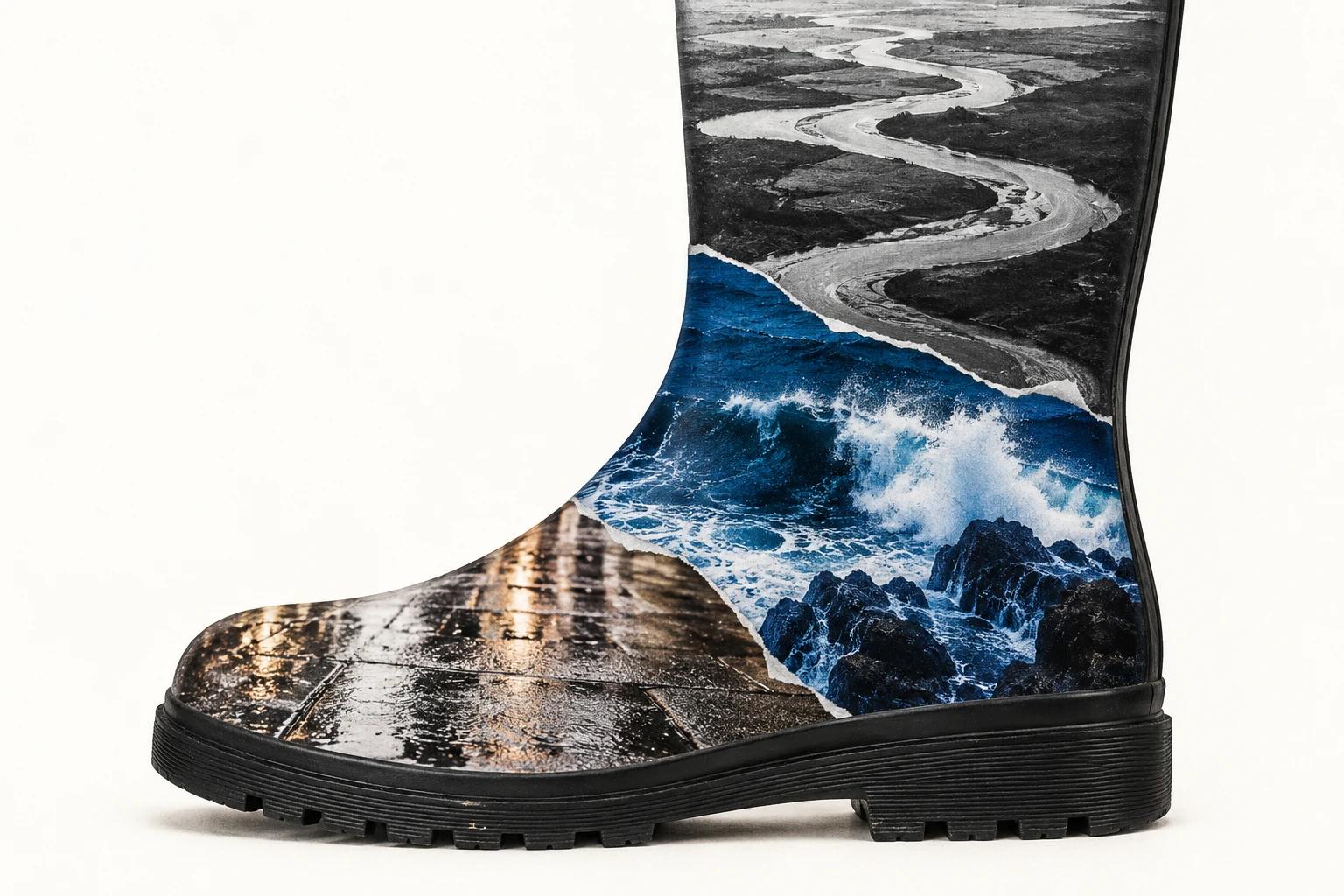
River flooding occurs when a river or stream rises and leaves its channel. It may develop over hours or days and can last much longer. Forecasts and gauges at named points can show what is expected or observed at those points. A gauge reading does not describe every road, tributary, or building upstream and downstream. A small stream may rise quickly even when no nearby forecast point exists.
Flash flooding develops rapidly, often within minutes or a few hours. Intense rain, rain falling upstream, a blocked channel, or a dam or levee failure can produce it. The sky at the home may not reveal what is happening farther upstream. Flash describes speed. Flash flooding can occur along a stream, through a neighborhood, in a canyon, or on streets that cannot drain fast enough.
Urban flooding occurs when rainfall overwhelms drainage or collects on streets, underpasses, basements, low lots, and other low areas. Pavement and roofs reduce the ground available to absorb water. Blocked or undersized drainage can make the problem worse. Urban flooding may be shallow and localized, or it may become dangerous flash flooding. A river does not have to leave its banks for water to enter a street or building.
Coastal flooding comes from ocean, bay, or other tidal water moving onto normally dry land. High tide, persistent onshore wind, large waves, and storm surge can contribute. Storm surge associated with a tropical cyclone is a specific life-threatening coastal hazard. Coastal water can also slow drainage from rivers and streets. Heavy rain, high river flow, tide, and surge can combine, so a coastal event may involve several mechanisms at once.
Use the exact watch or warning name
During an event, the exact official product matters more than a general hazard label. A Flood Watch, Flood Warning, Flash Flood Warning, Coastal Flood Warning, and Storm Surge Warning do not mean the same thing.
Open the current notice. Check:
- the product name;
- the area and locations described;
- when it was issued and when it expires;
- the stated hazard, source, impacts, and instructions; and
- whether the service displaying it has current information.
The related guide Flood watch vs. warning: what should you do? explains those differences.
What the available records can and cannot show
Public information may include county-level histories of reported events, broad FEMA risk indicators, current official alerts, and separate coastal-flood information.
These records provide context. They do not prove how water reaches a particular structure, whether its floor is above expected water, whether a road is passable, or which flood mechanism applies to the address.
Read the evidence label, source, date, and geographic scale. If property-specific evidence is missing, treat the flood mechanism for the address as unknown rather than assuming a nearby river is the cause.
Do not
- Do not use flash as a synonym for severe; it describes rapid development.
- Do not assume river flooding is the only concern because a river appears nearby.
- Do not assume an address outside a mapped high-risk zone cannot flood.
- Do not use a county event history to state that a home experienced the event.
- Do not add separate hazard scores together or treat the highest score as the active mechanism.
- Do not let this explainer compete with a current warning or evacuation instruction.
Next action
Review the flood information available for your home, including coastal information where relevant. Read each source's geographic scale. If an official alert is active, open the alert itself and follow current local instructions.
What changes this answer
General guidance becomes a personal decision through these details.
Rainfall, rivers, drainage, tide, and surge can contribute together.
A rapid rise can require action before a nearby gauge or visible sky tells the whole story.
A mapped area, gauge location, street, and individual building answer different questions.
Use the exact official notice and its timing; general hazard categories do not replace it.
Where this guidance stops
- This explainer does not predict flood depth at an address or certify a safe road.
- A county event history is not evidence that a particular home flooded.
- Current warnings, evacuation orders, and local instructions take priority over background reading.
Sources
Consequential guidance is checked against the linked source material.
- National Weather Service. Flood and Flash Flood Definitions. Checked August 30, 2026.
- National Weather Service. Flooding Types and Terminology. Checked August 30, 2026.
- National Weather Service. Hydrology Watch, Warning and Advisory Definitions. Checked August 30, 2026.
- NOAA Office for Coastal Management. Understand Coastal Stormwater Flooding. Checked August 30, 2026.
- NOAA Ocean Service. What Is High-Tide Flooding?. Checked August 30, 2026.
- National Hurricane Center. Storm Surge Overview. Checked August 30, 2026.
General information, not advice tailored to you or a guarantee of safety. You are responsible for decisions about your safety. Follow current directions from local authorities. Read the safety disclaimer.