The short answer
If water covers the road, the road edge is unclear, or a barricade is present, stop with enough distance to turn safely. Do not enter the water to test its depth and do not drive around the barricade. Turn around and use a route current authorities have not closed or warned against. If no safe route is available, remain at a safe location or move to higher ground according to official instructions.
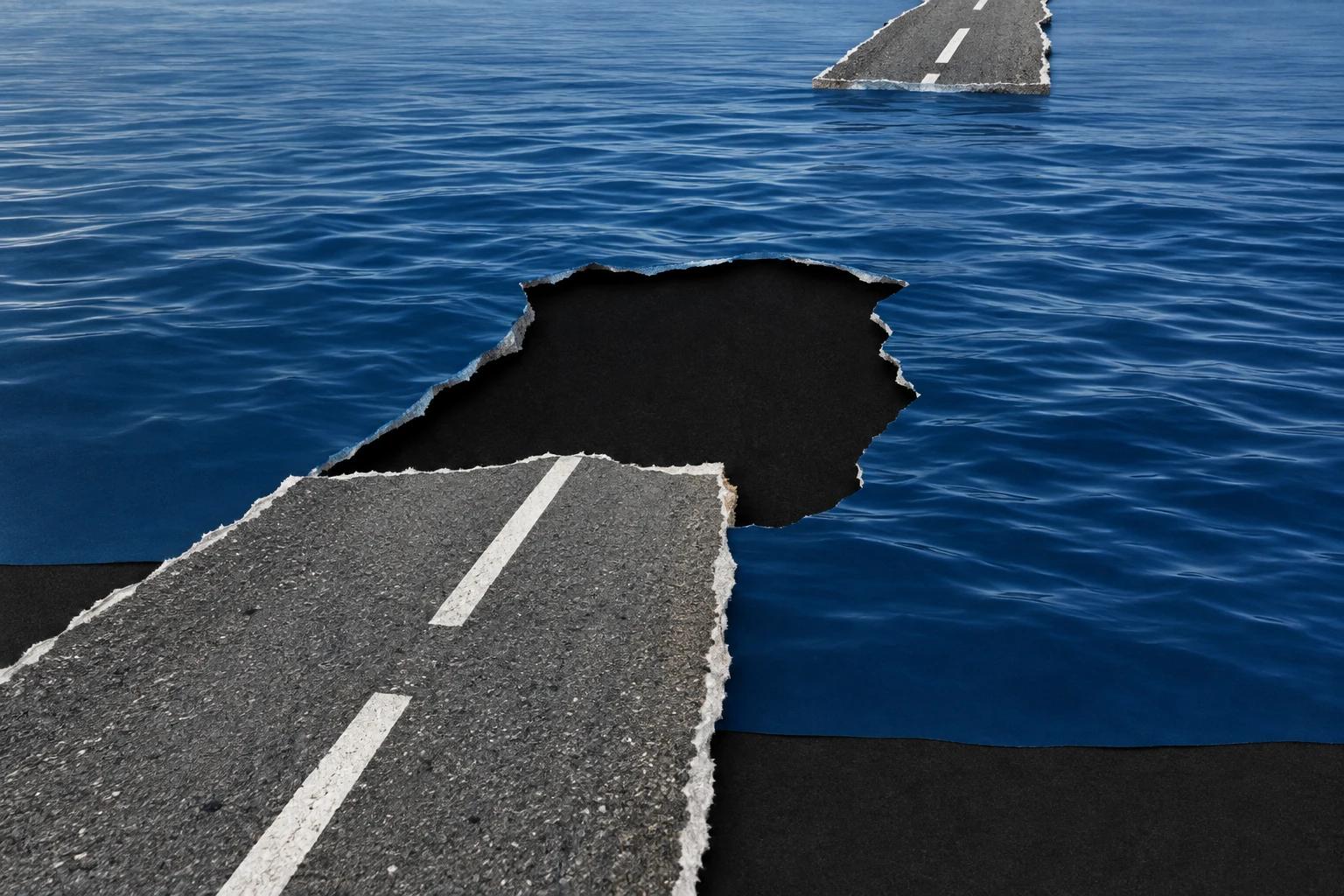
Start here
- Slow down before low crossings and underpasses, especially at night or in heavy rain.
- Stop before water, debris, a missing road edge, or a barricade.
- Turn around without entering the water to test it.
- Use current road closures and official evacuation routes, not an old or cached route alone.
Stop before the water
- Leave enough distance to turn safely.
- Do not test the water with the vehicle or on foot.
- Do not use the shoulder, median, sidewalk, or an unverified private road to pass a barricade.
- Turn around and use a route that current authorities have not closed or warned against.
A shallow-looking crossing is not a measurement
Floodwater can hide a washed-out road, open drain, debris, or missing bridge approach. It can be deeper or faster than it appears, rise during the crossing, and carry sewage, fuel, chemicals, or electrical hazards.
The National Weather Service warns that about 12 inches of rushing water can carry away most cars and about 18 inches can carry away most large vehicles. These are warnings, not safe thresholds. Depth, speed, road condition, and the vehicle are difficult to judge from inside a car.
Treat route guidance as a proposal
A route on a phone may not contain live flooding, closures, barricades, debris, or road damage. Before leaving, compare it with current evacuation routes and closures from local authorities, the exact warning, and a second route that does not rely on the same low crossing, bridge, tunnel, or shoreline.
If the road in front of you conflicts with the phone, believe the road and the authority controlling it. Nothing flagged along a route must never be interpreted as route is safe.
If you are stopped or trapped
Do not continue merely because turning is difficult. Call 911 if immediate help is needed, give the most precise location available, and follow the dispatcher and local rescuers.
Conditions around a vehicle can change too quickly for one general article to prescribe the right escape action in every situation. Do not walk or swim through floodwater as an alternative to driving through it.
What changes this answer
General guidance becomes a personal decision through these details.
Low crossings, bridges, tunnels, shoreline segments, road age, and a verified alternate change the plan.
Named roads, closures, evacuation routes, higher-ground instructions, and update time control.
Night, glare, heavy rain, and debris make water and missing pavement harder to see.
The driver should not interact with an app while moving. Stop safely or ask a passenger to review updates.
Where this guidance stops
- No depth estimate is permission to cross, and another vehicle crossing does not establish that yours can.
- A cached or unflagged route is not a live road-safety check.
- Trapped-vehicle rescue depends on rapidly changing conditions. Follow 911, rescuers, and local authorities.
Sources
Consequential guidance is checked against the linked source material.
- National Weather Service. During a Flood. Floodwater, barricade, higher-ground, and vehicle guidance. Checked September 13, 2026.
- National Weather Service. Flood Warning vs. Watch. Current flood-product definitions. Checked September 13, 2026.
- National Weather Service. Before a Flood. Route and higher-ground planning. Checked September 13, 2026.
General information, not advice tailored to you or a guarantee of safety. You are responsible for decisions about your safety. Follow current directions from local authorities. Read the safety disclaimer.