The short answer
Use the manufacturer-approved charger, keep the unit cool and dry, leave exits clear, inspect it before charging, and stop using it if it becomes damaged, swollen, leaking, unusually hot, discolored, noisy, or gives off an odor.
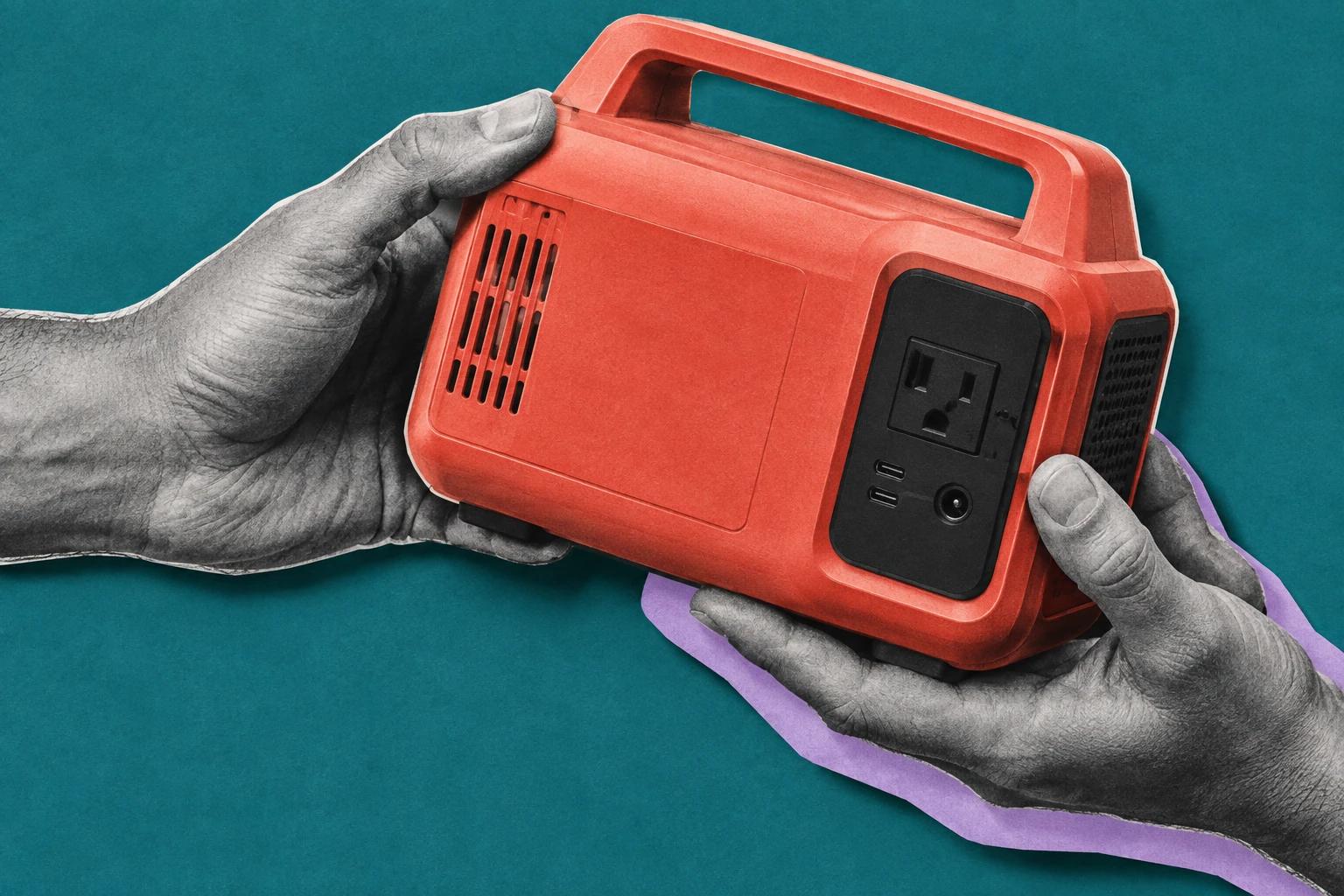
Start here
- Find the manual and identify the approved charger and permitted temperatures.
- Inspect the unit, cable, plug, and charger before charging.
- Choose a dry, stable charging location away from combustible materials and exit paths.
Before charging
Find the product manual and confirm the model, charger, permitted temperature range, ventilation or clearance requirements, water rating, storage charge, and inspection procedure.
Check the unit, cable, plug, and charger. Do not charge a unit that is cracked, swollen, leaking, wet when it is not rated for that condition, unusually hot, discolored, making unusual noises, or giving off an odor.
Prefer a product certified for its intended use by a nationally recognized testing laboratory. CPSC identifies UL 2743 as a standard for portable power packs. Certification does not replace correct use or recall checks.
Charge it where a problem will not block escape
Use the charger supplied or specified by the manufacturer. Follow the manual for outlet, extension-cord, adapter, grounding, ventilation, and supervision requirements. Do not overload an outlet or combine adapters to create an unsupported charging arrangement.
Charge on a stable, dry surface away from anything that burns. Keep the unit and cord out of exit paths. Do not cover the unit or place it in direct sun, a hot vehicle, or another extreme-temperature location.
The U.S. Fire Administration advises storing lithium-ion batteries at room temperature when possible and not charging them below 32°F or above 105°F. A product manual may specify a narrower range; follow the narrower limit.
Store it for the next outage
Follow the manual's storage charge and recharge interval. There is no universal percentage that applies to every chemistry and battery-management system.
Store the unit in a cool, dry, stable location away from combustible materials, direct sun, water, crushing, and impact. Keep the manual and approved charger with it. Record the last charge, inspection, test, and next review.
Do not place a heavy portable unit where a person must lift it unsafely during an outage. If it has to move, record who can move it and how.
Stop and leave when
Stop using or charging the unit if it shows abnormal heat, swelling, leaking, odor, discoloration, smoke, hissing, popping, or other unusual noise. If it smokes or catches fire, get out, call 911 from outside, and keep others away. Do not return for the unit.
Do not put a damaged lithium-ion battery or power station in household trash or an ordinary recycling bin. Follow the manufacturer and local hazardous-material or battery-recycling instructions.
After water or physical damage
Do not charge or test a unit that was submerged, flooded, crushed, punctured, dropped hard, or otherwise damaged until the manufacturer or a qualified service provider has given product-specific instructions. Keep people away if it is hot, smoking, hissing, leaking, or giving off an odor.
What not to do
- Do not use an unidentified or incompatible charger.
- Do not charge outside the permitted temperature range.
- Do not cover the unit, block required ventilation, or place it against combustible material.
- Do not charge where the unit or cord blocks an exit.
- Do not open, rebuild, or replace cells in a sealed battery pack yourself.
- Do not continue using a unit with damage or abnormal heat, shape, odor, liquid, color, or noise.
Next action
Inspect the unit, record the approved charger and storage location, charge it as the manual directs, test the planned loads, and set the next review date.
What changes this answer
General guidance becomes a personal decision through these details.
Use the product's charger, temperature limits, clearances, storage charge, and recharge interval.
Heat, cold, water, combustible materials, and blocked escape paths change whether charging or storage is appropriate.
Damage or abnormal heat, shape, odor, liquid, color, or noise requires stopping use and following product-specific guidance.
A heavy unit needs a safe handling plan before the household has to move it during an outage.
Where this guidance stops
- There is no universal storage charge or recharge interval for every battery chemistry and management system. The product manual controls.
- A damaged unit needs manufacturer or qualified-service instructions, not a home test or a DIY cell repair.
Sources
Consequential guidance is checked against the linked source material.
- U.S. Fire Administration. Battery Fire Safety. Checked September 24, 2026.
- U.S. Fire Administration. Lithium-Ion Battery Safety for Electronic Devices. Checked September 24, 2026.
- U.S. Consumer Product Safety Commission. Batteries, Fire (High-Energy Density). Checked September 24, 2026.
- Occupational Safety and Health Administration. Nationally Recognized Testing Laboratory Program: UL. Checked September 24, 2026.
General information, not advice tailored to you or a guarantee of safety. You are responsible for decisions about your safety. Follow current directions from local authorities. Read the safety disclaimer.