The short answer
A do-it-yourself cleaner is a temporary particle-reduction option. Its performance varies with the fan, filter, seal, design, filter loading, and room. It is not automatically equivalent to a tested commercial unit, and it does not remove every gas in wildfire smoke. If the fan, filter, or placement cannot meet the conditions below, use another cleaner-air method.
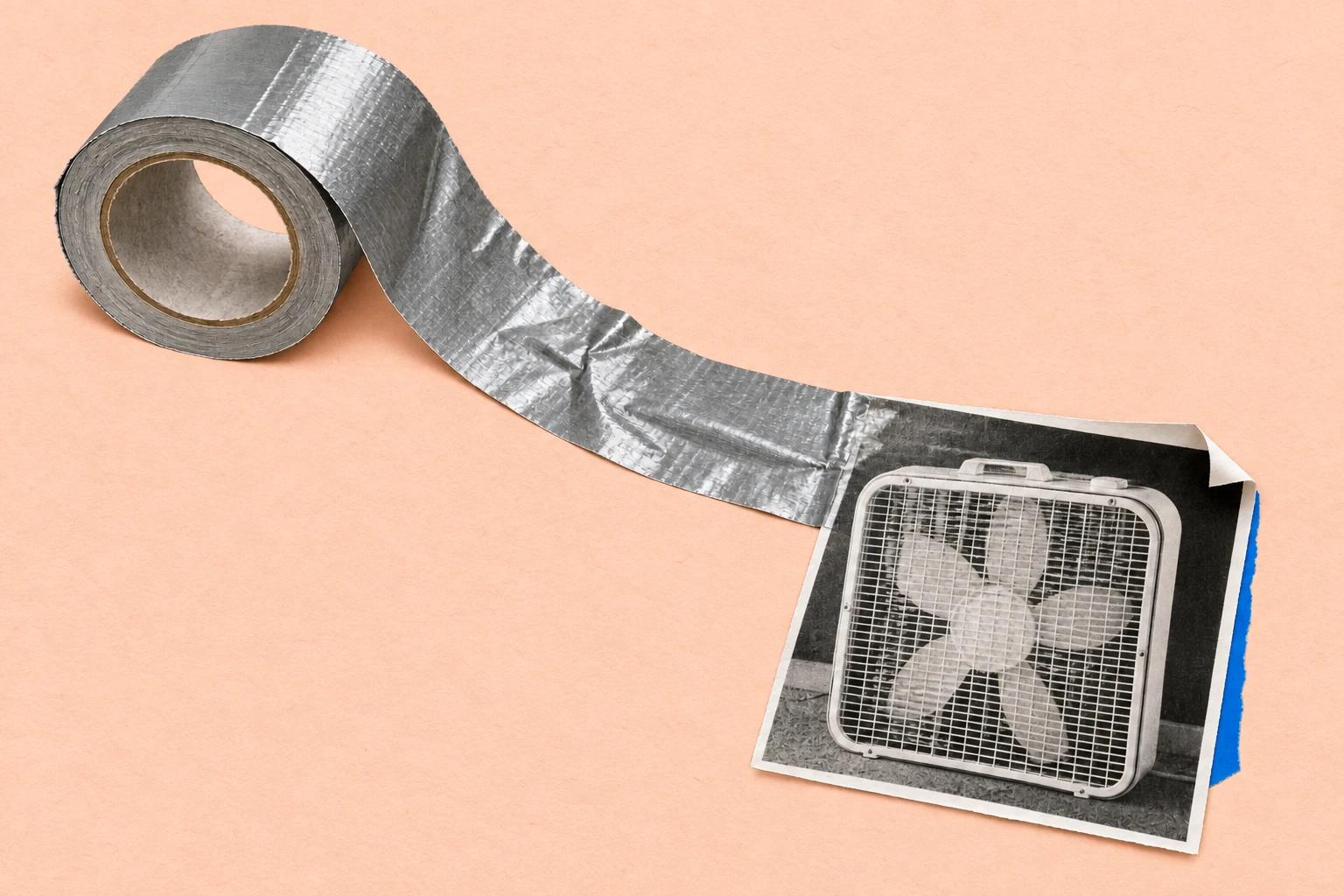
Start here
- The box fan was manufactured in 2012 or later.
- It carries a recognized safety certification such as UL or ETL.
- The fan, plug, and cord are undamaged.
- The fan's instructions permit ordinary unattended-duration operation only as you intend to use it.
- A MERV 13 or higher filter fits the design.
- The assembly can stand securely with unobstructed airflow.
What you need
- one newer certified box fan, commonly 20 by 20 inches;
- one 20-by-20-inch MERV 13 or higher filter for the basic design;
- strong tape or reusable fasteners that will not enter the fan;
- cardboard for a discharge-side shroud; and
- scissors or a utility knife used away from children and the fan.
A thicker filter or a design with several filters can reduce resistance and increase clean-air delivery. EPA provides tested examples. Start with a reviewed design rather than inventing an enclosure that blocks the motor or airflow.
Assemble a one-filter cleaner
- Unplug the fan. Inspect the housing, blades, guard, plug, and cord.
- Find the airflow arrow on the filter. The arrow should point toward the fan so air passes through the filter before entering the fan.
- Attach the filter to the intake side. This is usually the back of the fan. Align the edges and seal gaps so air is pulled through the filter rather than around it.
- Add a shroud to the outlet side. Cut a circular opening slightly smaller than the blade diameter in a square of cardboard and attach it to the front guard without touching the blades. A shroud can reduce recirculation at the corners and improve performance.
- Stand the assembly securely. Keep both intake and outlet clear. Do not place it on a soft surface, near water, or where a child, pet, curtain, or cord can pull it over.
- Plug it directly into a suitable wall outlet. Do not use an extension cord or power strip unless the fan manufacturer expressly permits that setup and it meets electrical requirements.
- Run it and observe. Listen for rubbing or unusual noise, check that the assembly is stable, and stop if the plug, cord, motor, or housing becomes unusually hot or smells electrical.
Use it in one room
Close windows and doors during smoke when indoor heat remains manageable. Place the cleaner in the occupied room with space around both sides. Run it continuously at the highest practical setting. Reduce particle sources in the room.
Do not let children operate or play with the fan, filter, cord, or shroud. Keep working smoke alarms in the home. Follow the fan manufacturer's directions and never bypass a safety control.
Maintain it
Inspect the filter and fan regularly during smoke. Replace the filter when it is visibly dirty, smells smoky, is damaged, restricts airflow, or reaches the manufacturer's limit. Unplug the fan before touching the filter or shroud.
After smoke improves, ventilate when official information and outdoor conditions show the air is cleaner and the ventilation is otherwise safe. Store the fan and clean replacement filters dry and protected from damage.
What not to do
- Do not use an old, damaged, uncertified, recalled, or modified fan.
- Do not attach a filter to the outlet side with its arrow pointing the wrong way.
- Do not block the motor, guards, intake, or outlet.
- Do not run the assembly near water, loose fabric, or a place it can be knocked over.
- Do not let a DIY cleaner delay evacuation or a move from dangerous indoor heat.
Next action
If a DIY cleaner is the chosen method, assemble and test it before smoke season, record the fan and filter specifications, and keep at least one correct replacement filter available.
What changes this answer
General guidance becomes a personal decision through these details.
fan age, certification, condition, manufacturer instructions, filter rating, thickness, and design.
size, ceiling height, leakage, occupied area, outlets, and tipping or cord hazards.
children, pets, mobility, vision, hearing, and ability to inspect and maintain the assembly.
smoke duration, indoor heat, power reliability, and access to a commercial cleaner or cleaner-air location.
Where this guidance stops
- This guide does not certify a particular fan-filter assembly, calculate its actual clean-air delivery, or make a home safe to occupy. Use a tested design from a current public-health source. Stop and use another method if the equipment is damaged, overheating, unstable, or inconsistent with its instructions.
Sources
Consequential guidance is checked against the linked source material.
- U.S. Environmental Protection Agency. Create a Clean Room to Protect Indoor Air Quality During a Wildfire. Checked September 24, 2026.
- U.S. Environmental Protection Agency. Research on DIY Air Cleaners to Reduce Wildfire Smoke Indoors. Checked September 24, 2026.
- U.S. Environmental Protection Agency. Indoor Air Filtration. Checked September 24, 2026.
General information, not advice tailored to you or a guarantee of safety. You are responsible for decisions about your safety. Follow current directions from local authorities. Read the safety disclaimer.